I used to think the pile by the door was proof that I was failing at organization. Really, it was my ADHD brain trying to create a system, just without the structure it needed to work. Traditional organizing advice often asks you to put things away and remember where they are later. For someone with ADHD, that can be unrealistic when the system is hidden, too detailed, or takes too many steps.
So, what’s the solution? A drop zone is an intentional place where everyday items land when you come home, like keys, bags, mail, shoes, and sunglasses. The difference between a drop zone and a pile is that every item has a clear place to go. Here’s how you can create a drop zone that your ADHD brain will use.
Use the Natural Landing Spot
A drop zone works best when placed near where you naturally set things down. For many of us, that may be by the garage entry, the kitchen counter, a hallway bench, or the wall beside the most-used entrance. The goal is not to force yourself into a brand-new habit but to add structure to a habit you already have.
For me, this meant paying attention to where my keys, purse, and mail ended up at the end of a normal day. Once I stopped trying to organize for the version of myself who calmly hangs everything in a closet, the system became easier to keep.
Make It Visible and Simple
ADHD brains often struggle with “out of sight, out of mind,” so hidden storage can become a tiny black hole. Clear bins, open hooks, trays, and labeled baskets can make the system easier to use. The goal isn’t to create a magazine-worthy entryway. It’s to get out the door with your keys!
Experiment to find what works for you. Start with the items you lose most often, then build the drop zone around them. Put keys on a wall hook, bags on sturdy pegs, shoes in an open basket, and mail in a visible tray. The fewer steps each item requires, the more likely you are to use the drop zone when your brain is tired.
Let Your Storage Match Your Habits
Sometimes the problem is not that you need another basket. Sometimes your home simply does not have enough practical storage. Adding built-ins is one of the top considerations when remodeling, but it looks different for people with ADHD because the storage must be easy to see, reach, and use.
To customize your built-ins:
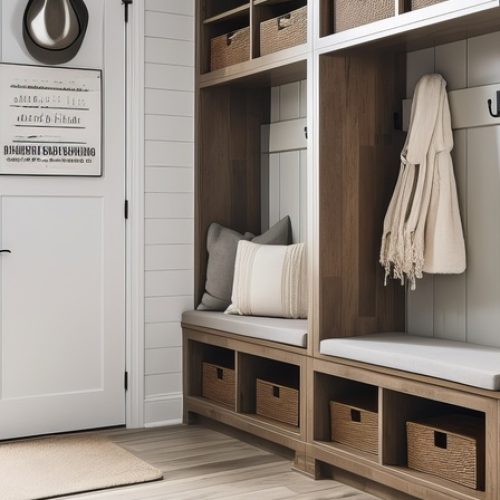
- Add open cubbies for shoes, bags, and everyday items.
- Choose wall hooks instead of closed closets for hanging things.
- Include a built-in bench with storage underneath for entryways or mudrooms.
- Keep the most-used storage at eye level or within easy reach.
Creating an ADHD-friendly drop zone turns a stressful pile into a practical system. Start where your items already land, keep the setup visible, and make each step as easy as possible. When your storage matches your habits instead of against them, everyday clutter becomes easier to manage.