
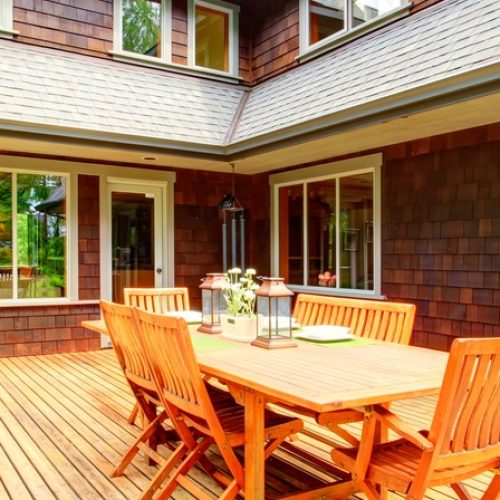
There’s something comforting about having an outdoor space that’s supposed to help you relax. A deck should feel like a little extension of your home—a place for morning coffee, kids playing nearby, or quiet evenings after a long day. But I’ve learned that sometimes a deck can look perfectly fine on paper and still feel crowded or overwhelming in real life.
When working on deck designs in the past, I realized the problem usually wasn’t the size. It was the layout, the visual clutter, and the way everything competed for attention. As a woman with ADHD, I’m especially sensitive to that kind of overstimulation. Once I started focusing on reducing visual noise rather than adding more space, it instantly felt more spacious, and I’m here now to share these deck design tips with you.
Keep the Layout Simple and Flowing
The first thing I usually adjust is the layout. Too many separate furniture pieces can make a deck feel like an obstacle course, especially when kids are running in and out. I prefer built-in bench seating along the perimeter because it frees up the center of the deck and keeps traffic moving naturally.
When I redesigned my own deck, I focused on creating a single clear walking path rather than multiple tiny zones. That simple shift made the space feel bigger immediately. It also reduced the constant mental note of “move this” or “watch out for that,” which is such a relief.
Lighten Things Up Visually
Color makes a bigger difference than I expected. Dark stains and heavy railings can feel grounding, but they can also visually shrink a space. Choosing lighter decking boards and coordinating railings helped my deck reflect more sunlight and feel open instead of enclosed.
I’ve seen this work beautifully in other homes, too. Even swapping out darker furniture cushions for lighter fabrics can create a softer, more breathable atmosphere. When everything feels lighter, the space feels easier to enjoy.
Choose Multi-Functional Features
One of the most helpful changes I made when designing a deck to feel more spacious was incorporating storage into preexisting components. Storage benches became a place to hide outdoor toys, gardening supplies, and extra pillows. Instead of adding bins or baskets that crowd the space, everything had a built-in home.
I also lean toward foldable or stackable furniture whenever possible. It allows the deck to shift with our needs, whether we’re hosting a barbecue or having a quiet afternoon outside. Fewer permanent pieces mean fewer visual distractions competing for attention.
Open Up the View
When trying to open things up, sightlines matter more than most people realize. Replacing bulky railings with a more open design made my deck feel like it extended into the yard instead of stopping abruptly at the edge. This is one of the big benefits of cable railing systems. Regardless of what you choose, though, being able to see farther creates a sense of expansion, even if the dimensions stay the same.
I’ve also noticed that running deck boards lengthwise can subtly stretch the appearance of the space. While a seemingly small design choice, it adds up in a powerful way. When the view feels open and uninterrupted, the whole environment feels calmer and more inviting.